
Book Long-Term Furnished Corporate Apartment: A Step-by-Step Guide
Table of Contents
What Corporate Housing Is and Who It's For
Step 1: Assess Your Needs and Timeline
Step 2: Create Your Corporate Housing Booking Checklist
Step 3: Understand What Is Included in Corporate Housing
Step 4: Review Corporate Apartment Lease Terms Before Signing
Step 5: Evaluate Corporate Apartment Rental Costs and Budget
Step 6: Book Your Furnished Apartment and Complete Verification
Common Booking Mistakes to Avoid
Frequently Asked Questions
Last Updated: October 8, 2026
What Corporate Housing Is and Who It's For
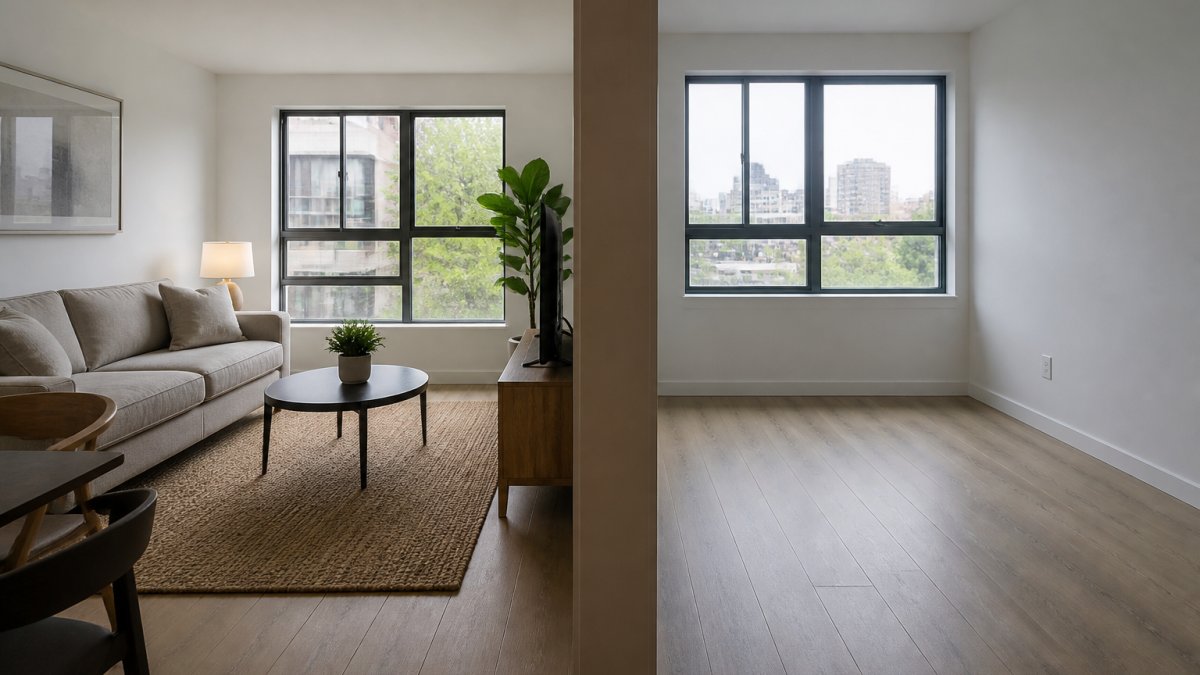
Corporate housing refers to fully furnished, move-in-ready accommodations for professionals on temporary assignments, international students, relocating employees, and remote workers, making it easy to move in without the hassle of traditional rentals. Unlike traditional rentals, corporate apartments come equipped from day one: kitchenware, linens, toiletries, and workspaces.
The appeal: you arrive, unlock the door, and live comfortably without weeks of setup, ideal when your stay is finite. At FoxySuites, our furnished apartments are set up for this: move-in-ready units with utilities included, in central Toronto.
Who uses corporate housing? International students, young professionals between leases, HR departments sourcing temporary accommodation, and remote workers who value flexibility, all wanting housing fast, furnished, and without a multi-year commitment.
Step 1: Assess Your Needs and Timeline
Before you book, clarify three things: how long you're staying, what you need in a unit, and where you need to be.
Duration shapes every decision. A three-month stay has different priorities than a two-year assignment. Short-term stays often carry premium pricing; longer stays may offer better rates but make lease flexibility, cancellation clauses, and extension terms critical. Ask: could my stay stretch from one year to 18 months? Do I need an exit clause?
Next, list what you actually require, not what sounds nice, but what you genuinely use: a dedicated desk and reliable internet? Do you cook? Pets? Specific transit lines? This list becomes your filtering criteria, preventing overpayment for unused amenities or booking a unit missing something essential.
Finally, identify your location constraints. Where's the office or campus? How much commute time will you accept? Location drives quality of life and your search radius, narrow this first, then search within it.
Step 2: Create Your Corporate Housing Booking Checklist
A structured approach prevents costly oversights. Use this checklist for every property.
Lease terms and flexibility:
What is the minimum stay requirement?
Can you extend your lease if needed?
What are the cancellation terms if you need to leave early?
Is there a notice period, and what penalties apply?
Are utilities and internet included, or billed separately?
Unit specifics:
How many bedrooms and bathrooms?
Is there dedicated workspace (desk, chair, reliable Wi-Fi)?
What kitchen equipment is provided?
Are linens, towels, and basic toiletries included?
Is there laundry in-unit or on-site?
Building and location:
Is the property near public transit?
What amenities are on-site (gym, parking, common areas)?
Is the neighborhood safe and walkable?
What's the noise level and foot traffic?
Costs and billing:
What is the monthly rent?
Are utilities included, and if not, what's the estimated cost?
Is there a last month's rent deposit, and how much is it?
Are there move-in fees or administrative charges?
What payment methods are accepted?
Support and maintenance:
What's the response time for maintenance requests?
Who do you contact for emergencies?
Is there 24/7 support, or are there specific hours?
How are repairs handled?
Verification and legal:
Can you review the lease before signing?
What identification and documentation do they require?
Is there a background check or credit check?
Are references required?
Refer to this checklist for every property. Properties that skip transparency on any of these items warrant extra caution.
Step 3: Understand What Is Included in Corporate Housing
Move-in-ready means different things to different landlords. Clarify exactly what arrives with your keys.

Furnishings typically include a bed frame, mattress, and pillows; a sofa or seating area; dining table and chairs; and bedroom dressers. Some add a desk and office chair if you work from home. Verify bed size and furniture condition.
Kitchen equipment varies widely. Full kitchens should include a refrigerator, stove, oven, microwave, dishwasher, and basic cookware, but dishes and cutlery aren't guaranteed. If you cook regularly, ask for a detailed list before booking.
Linens and textiles often come included: bed sheets, pillowcases, blankets, towels, and bath mats. Confirm whether linens are refreshed weekly or provided once.
Toiletries and cleaning supplies might include shampoo, soap, toilet paper, and basic cleaning products. Don't assume, ask, and budget for an initial shopping trip.
Internet and utilities are critical if you work remotely. Confirm internet speed and whether it's included or billed separately, and ask about electricity, heating, water, and garbage, get it in writing.
What you should bring: personal items, electronics, seasonal clothing, and specialty items not typically provided. Most corporate apartments handle the heavy lifting; you handle the personal touches.
Step 4: Review Corporate Apartment Lease Terms Before Signing
Never sign a lease without reading it completely. Lease terms define your rights, obligations, and exit options.
Lease duration and renewal set the baseline. A 12-month lease is standard, but terms range from month-to-month to multi-year.
Rent and payment schedule should be explicit: the monthly amount, due date and payment method. (In Ontario, landlords generally can't charge late fees; only a capped charge for a returned payment is allowed.) Ask whether rent increases annually and by how much. In Ontario, rent can rise once every 12 months with 90 days' written notice, capped at the guideline (2.1% for 2026) unless the unit was first occupied after November 15, 2018.
Deposit terms should be spelled out. In Ontario, the only deposits allowed are a last month's rent deposit and a refundable key deposit.
Utilities and additional costs must be itemized. If included, confirm which ones (electricity, water, gas, internet, trash). If they're your responsibility, get typical monthly estimates.
Cancellation and early termination clauses are vital. Can you end early, and on what terms? In an Ontario residential tenancy, you can't end a fixed term early on your own; it takes the landlord's agreement or an approved assignment.
Maintenance and repairs define who fixes what. The landlord maintains structural elements, appliances, and major systems; you're responsible for damage you or your guests cause wilfully or through negligence.
House rules and restrictions cover noise, guests, pets, smoking, and alterations. Confirm you can live comfortably within them, especially guest and pet policies. In Ontario residential tenancies, a no-pets clause in the lease is generally void, though condominium rules can still restrict pets.
Dispute resolution and legal jurisdiction specify how conflicts are handled. If the RTA applies, disputes go to the Landlord and Tenant Board, and lease terms can't override the Act. Understand your recourse if a dispute arises.
Red flags to watch:
Vague language about what's included or excluded
Cancellation penalties that seem excessive
No written lease: insist on one (most Ontario residential tenancies must use the province's Standard Lease form)
Pressure to sign quickly without time to review
Missing contact information for the landlord or property manager
Read the lease, ask questions, and request modifications if terms don't suit you. A good landlord will work with you; a reluctant one is a warning sign.
Step 5: Evaluate Corporate Apartment Rental Costs and Budget
Furnished corporate apartments cost more than unfurnished rentals because you're paying for furniture, utilities, and immediate occupancy. Understanding the full cost prevents budget surprises.
Monthly rent is the largest line item. Corporate apartments in central Toronto vary by size, location, and amenities. Contact FoxySuites or other providers for current quotes.
Utilities included or excluded significantly affect your total.
Internet and connectivity matter if you work from home. Confirm the speed (at least 50 Mbps for video calls and streaming) and whether it's included in rent.
Last month's rent deposit: in Ontario, a landlord can collect up to one month's rent as a deposit, which is applied to your final month and earns yearly interest. It's not an extra cost, but it affects how much cash you need up front.
Move-in or administrative fees: under Ontario's Residential Tenancies Act, landlords generally can't charge extra fees for lease setup or processing on top of rent and the permitted deposits. If a provider quotes one, ask what it's for.
Early termination penalties aren't a cost if you complete your lease, but understand them if you might leave early, so you can weigh whether flexibility is worth the premium.
Comparison with alternatives: a furnished corporate apartment usually costs more per month than an unfurnished rental, but far less upfront, since you skip buying, delivering and later selling furniture.
Create a simple budget:
Cost Category | Included? | Estimated Monthly Cost |
Rent | Yes | Quote from provider |
Utilities (if separate) | No | Ask provider |
Internet (if separate) | No | Ask provider |
Parking (if needed) | No | Ask provider |
Other charges (if any) | No | Ask provider |
Total Monthly |
| Your total |
Use this table to compare options and ensure the total fits your budget.
Step 6: Book Your Furnished Apartment and Complete Verification
Once you've selected a property, booking is straightforward but requires attention to detail.
Initiate contact with the property manager or landlord. Most providers have online inquiry forms or booking teams.
Request a formal quote itemizing rent, utilities, fees, and included services. Confirm lease terms in writing, and ask for references from current or recent tenants if you want reassurance.
Prepare documentation for verification. Most landlords require:
Government-issued photo ID
Proof of income (pay stubs, employment letter, or offer letter)
References (previous landlord, employer, or character reference)
Background check consent
Have these ready to speed things up. International students may provide a university letter and a guarantor instead of employment proof.
Review the lease carefully once you receive it. Read every section, highlight anything unclear, and request clarification or modifications before signing.
Sign the lease once satisfied. Many providers offer digital signing; ensure you receive a fully executed copy signed by both parties.
Arrange payment of the first month's rent and last month's rent deposit. Confirm the payment method, due date, and account details, use secure methods (bank transfer, credit card), and request a receipt.
Confirm move-in logistics. When can you access the unit? Who provides keys or access codes? Are there move-in instructions? Is there parking for a moving truck?
Document the unit's condition on move-in.
Introduce yourself to building management and neighbors in multi-unit buildings. Learn emergency procedures, trash collection days, and community rules, a friendly start builds goodwill.
Common Booking Mistakes to Avoid
Learning from others' missteps saves time and money.
Booking without clarifying lease flexibility. Many assume corporate housing is month-to-month; it often isn't.
Overlooking utility costs. A rental advertised at one price becomes far more expensive if utilities aren't included.
Skipping the lease review. A lease is a legal contract. Reading it takes an hour; ignoring it can cost thousands.
Not confirming what's actually included. "Furnished" varies widely, one apartment might lack a desk, another kitchen utensils. Get a detailed inventory in writing.
Booking based on photos alone. Photos are curated.
Ignoring the neighborhood. A great apartment in an inconvenient location becomes frustrating quickly.
Underestimating move-in costs. Rent, deposit, and fees are just the start. Budget for groceries, toiletries, phone setup, transit passes, and any missing items, moving costs add up.
Not documenting the unit's condition. Moving in without photos or written notes leaves you without evidence if the landlord later claims you caused damage.
Choosing based on price alone. The cheapest option often hides costs: poor maintenance response, worn furniture, unreliable utilities, or a difficult landlord.
Booking without backup plans. If your first choice falls through, have alternatives ready. Furnished units in central areas can go quickly, so know your second and third options.
Booking a long-term furnished corporate apartment requires deliberate planning, but the payoff is immediate occupancy without sourcing furniture or negotiating lengthy unfurnished leases.
At FoxySuites, we simplify this process with fully furnished, move-in-ready units in central Toronto for corporate stays, students, and relocating professionals. Our 50 Castleton Avenue property is EnerGuide Certified at 27 GJ/year, and utilities and high-speed internet are included in the rent.
Frequently Asked Questions
How do I book a long-term furnished corporate apartment?
To book a long-term furnished corporate apartment, start by identifying your needs (location, move-in date, lease length). Create a checklist of must-haves such as proximity to transit, workspace for remote work, and pet-friendly policies. Research providers offering fully furnished, move-in-ready units. Review lease terms carefully, especially cancellation and extension policies. Verify the property's certifications and maintenance response times. Submit your application with required documents (employment letter, references, proof of income). Once approved, sign the lease and arrange your move-in date.
What is included in a furnished corporate apartment?
A fully furnished corporate apartment typically includes bedroom furniture (bed, nightstands, dresser), kitchen essentials (cookware, dishes, utensils), bathroom fixtures and toiletries, living room furniture (sofa, chairs, tables), linens and towels, and basic appliances (refrigerator, stove, microwave). Many providers include utilities and internet access. Move-in-ready units eliminate the need to purchase or arrange furniture, allowing you to settle in immediately. Always confirm the exact inventory with your provider before booking, as inclusions vary.
What should I check before booking a furnished apartment for work?
Before booking, verify the lease terms, including minimum stay, cancellation policy, and extension options. Confirm which utilities and services are included (internet, hydro, water, housekeeping). Check the property's location near public transit and amenities relevant to your work. Review maintenance response times and how to report issues. Ask about parking if you have a vehicle. Confirm the move-in-ready inventory matches your needs. For remote workers, confirm internet connectivity. Request recent tenant references if possible. Ensure the property meets your company's housing standards if booking for corporate relocation.
Are utilities and internet included in corporate housing?
Many corporate housing providers include utilities and internet in their rental packages, though this varies by property and lease agreement. Some include all utilities (hydro, water, heat), while others may charge separately for certain services. Internet access is increasingly standard in corporate apartments designed for remote workers and business travelers. Always clarify what is included in your lease agreement before signing. Request information on typical utility costs to understand them if any services are not included. This transparency helps you budget accurately and avoid unexpected expenses.
CONTACT US AND INQUIRE TODAY!
Disclaimer: This article is for general information only and is not legal, tax, financial or professional advice. It was written with the help of AI tools and reviewed by our team, but it may contain errors, and laws, prices and company policies change. Information about other companies is based on what was publicly available at the time of writing; contact them directly for their current terms. Before making decisions, check official sources such as the Landlord and Tenant Board or speak with a qualified professional. FoxySuites rental terms, pricing and availability are set out in your lease agreement and may change.


Comments